Manual Toothbrush Effectiveness and Technique Optimization: A Comprehensive Scientific and Practical Analysis
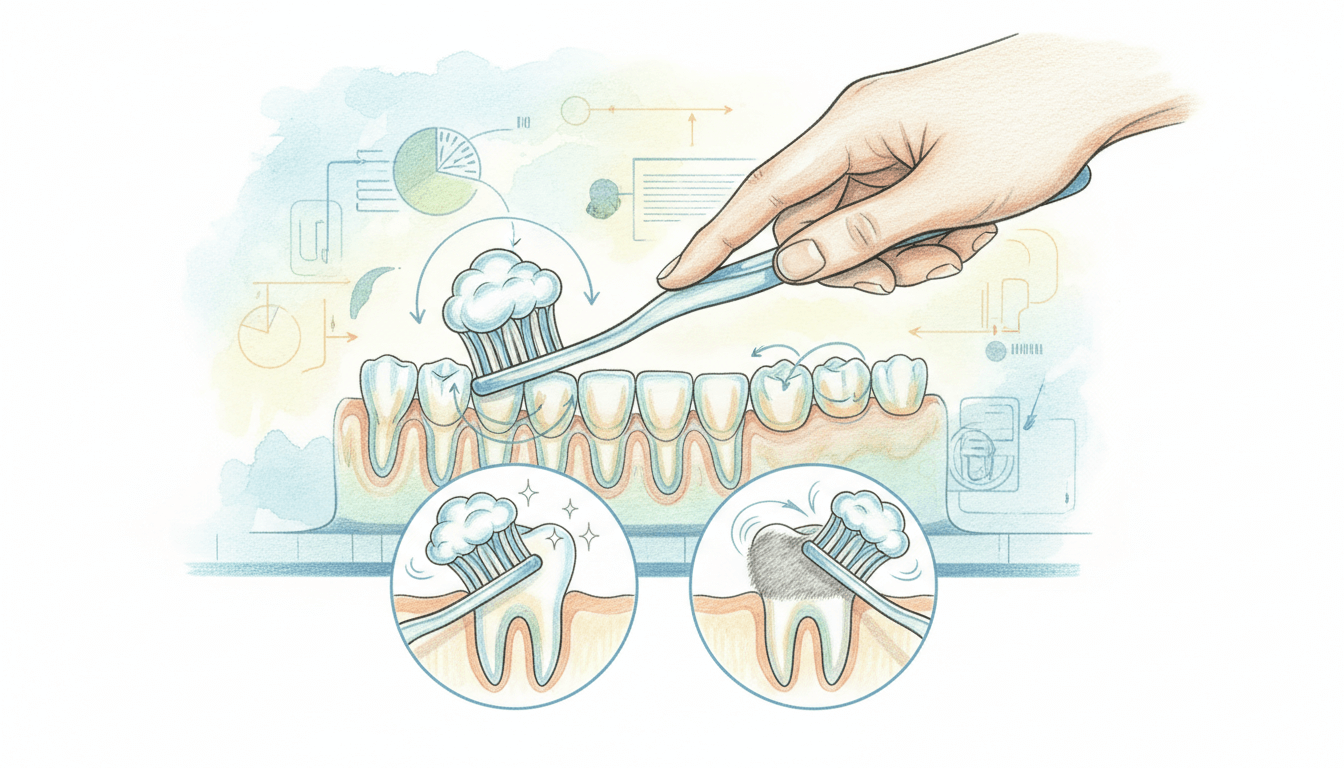
This exhaustive guide deconstructs the science and practice behind maximizing manual toothbrush efficacy. Moving beyond basic advice, we provide a deep-dive analysis of how bristle design, handle ergonomics, and, most critically, precise brushing technique interact to determine oral health outcomes. We compare core brushing methodologies, evaluate the biomechanics of plaque removal, and offer evidence-based recommendations for selecting tools and perfecting your routine to achieve clinical-level cleanliness at home, all grounded in American Dental Association principles.
For centuries, the manual toothbrush has been the cornerstone of personal oral hygiene, a seemingly simple tool tasked with the complex biological defense against plaque biofilm, gingivitis, and decay. Yet, its widespread use belies a significant performance gap: the chasm between mere usage and optimal, effective technique. At Dental Care Best, we posit that the manual toothbrush is not a commodity but a precision instrument whose utility is wholly dependent on the operator's knowledge and skill. This analysis is not a superficial list of tips; it is a forensic examination of the manual toothbrush as a system. We will dissect its components—bristle topology, filament density, handle kinematics—and evaluate them against the gold standard of evidence-based dentistry, primarily the American Dental Association Guidelines. The core thesis is that optimizing manual brushing is a three-variable equation: Tool Selection + Biomechanically Sound Technique + Behavioral Consistency = Clinical Efficacy. By comparing different technique paradigms, bristle configurations, and brushing philosophies, this guide aims to transform your daily routine from a habitual motion into a targeted, effective, and safe prophylactic procedure. The stakes extend beyond cosmetic cleanliness; they encompass the long-term integrity of the gingival margin and enamel surface, making mastery of this fundamental tool one of the most impactful health investments an individual can make.
Detailed Analysis
The Bass Technique: The Gold Standard for Subgingival Plaque Control
Strengths
- Superior efficacy in disrupting subgingival plaque, the primary etiological factor in gingivitis, as validated by decades of periodontic research. The angulation allows bristle tips to penetrate 1-2mm into the gingival sulcus without causing trauma, targeting the area where disease initiates. Promotes gingival health by providing gentle stimulation to the tissue, enhancing keratinization and blood flow. The technique's structured, station-by-station approach ensures systematic coverage of all dentition surfaces, reducing the likelihood of missed areas. It is universally teachable and forms the foundational method upon which most electric brush oscillations are based, making skill transferable.
Limitations
- Has a steeper learning curve than rudimentary scrubbing; requires conscious effort and mirror use initially to master correct angulation, especially on posterior lingual surfaces. Can be perceived as time-consuming before muscle memory develops, potentially leading to rushed execution. If pressure is not controlled, the focused angulation can theoretically lead to localized gingival recession or cervical abrasion over time, though this risk is lower than with horizontal scrubbing. Requires the user to have the manual dexterity to maintain precise brush head positioning for the full two minutes, which can be challenging for individuals with arthritis or mobility limitations.
Adopting the Bass technique feels fundamentally different from casual brushing. Initially, users report a heightened awareness of the gum-tooth junction and a sensation of 'tickling' the gums. The process is slower and more deliberate, often requiring a timer to ensure full duration is met without reverting to old habits. After 1-2 weeks of consistent practice, the motions become automated. The most notable real-world feedback is a tangible change in gum texture—firmer, less bleed-prone tissue—and a 'squeaky clean' sensation along the gumline that lasts longer. Dental hygienists frequently note improved periodontal probing scores and reduced bleeding indices in patients who faithfully employ this method, confirming its clinical translation.
The Modified Bass/Stillman Technique: Integrating Gingival Stimulation
Strengths
- Offers a more comprehensive cleaning action by combining the subgingival plaque disruption of Bass with the coronal cleansing and gingival tissue stimulation of the roll technique. The rolling finale helps clear dislodged plaque from the cervical area and provides a gentle, therapeutic massage to the gingivae, which can improve circulation and promote tissue health, a benefit for those with early signs of inflammation. It can feel more 'complete' to users, as the sweeping motion provides a familiar cleaning sensation across the visible tooth surfaces. Often recommended for patients exhibiting early signs of gingival recession as a way to maintain sulcular cleaning while incorporating a less traumatic motion over exposed cementum.
Limitations
- The multi-step nature (vibrate then roll) increases procedural complexity and total time per tooth segment, potentially extending brushing time beyond recommendations if not managed efficiently. The rolling motion, if performed with excessive pressure or with stiff bristles, can still contribute to abrasive lesions on exposed root surfaces. Requires significant coordination to fluidly switch between the two motion types without losing the correct initial angulation. Some critics argue it may dilute the focus on the critical sulcular area, as the user's attention shifts to the rolling action, potentially reducing the efficacy at the disease-prone gumline.
Users transitioning from Bass to Modified Bass often describe it as a 'two-in-one' routine. The initial vibratory phase feels targeted, while the concluding roll provides a satisfying, sweeping clean. Patients with sensitive gums or a history of mild inflammation frequently report a soothing effect from the massage component. However, the learning curve is notable; it's common to either neglect the vibratory phase in favor of the simpler roll or to perform the roll with too much vigor. Successful adoption typically involves practicing in front of a mirror, focusing on one quadrant at a time. Long-term users appreciate its holistic feel, but dental professionals emphasize that the efficacy still hinges on perfecting the initial Bass-oriented angulation and pressure.
The Charter's Technique: A Post-Periodontal Surgery and Orthodontic Specialized Method
Strengths
- Uniquely beneficial for patients with fixed orthodontic appliances, as the bristle orientation facilitates cleaning under archwires and around brackets more effectively than vertical methods. Excellent for cleaning abutment teeth of fixed bridges and areas around dental implants, where preserving the peri-implant mucosa is critical. The technique is inherently low-trauma due to its light pressure and the use of the bristle sides, making it the method of choice following periodontal surgery or for patients with highly sensitive, fragile gingival tissues. Promotes excellent cleaning of interdental spaces without requiring aggressive horizontal jabbing of bristles into the embrasures.
Limitations
- Highly specialized; it is not recommended as a primary technique for the general population with healthy dentition and gums, as it is less effective than Bass for removing subgingival plaque in deep, healthy sulci. Can be awkward to perform on lingual surfaces of anterior teeth. The circular motion, if not carefully controlled, can still lead to abrasive wear if excessive pressure is applied. Requires a specific type of brush—often one with very soft, tapered bristles—to be fully effective and comfortable. Mastery is almost always taught by a dental professional in response to a specific clinical need.
This technique is almost exclusively learned in a clinical setting. Orthodontic patients or those recovering from gum surgery are taught by their hygienist. Initially, it feels counterintuitive and inefficient, as the brush seems to be skimming the surfaces rather than digging in. However, for its intended purposes, users quickly appreciate its value. Orthodontic patients find it superior for dislodging food debris around brackets without damaging wires. Post-surgical patients find it painless. It is rarely used as a full-mouth technique but rather as a targeted method for specific areas, often in conjunction with other techniques for the rest of the mouth. Compliance is high when its purpose is well-explained by a clinician.
The Horizontal Scrub Method: A Common but Problematic Default
Strengths
- Intuitively simple and requires minimal instruction or thought, leading to its widespread adoption, especially in childhood. Can feel vigorous and give a subjective sense of 'deep cleaning' due to the friction and force involved. May be moderately effective at removing loose debris and plaque from the broad, easy-to-reach surfaces of anterior teeth.
Limitations
- Clinically inferior for comprehensive plaque removal, as it fails to address the critical plaque reservoir at the gingival margin and within the sulcus. The primary cause of non-carious cervical lesions (abrasion and abfraction), leading to irreversible loss of tooth structure at the gumline, sensitivity, and aesthetic compromise. Contributes to gingival trauma, recession, and clefting by directly abrading the delicate marginal tissue. Promotes inefficient cleaning pattern, as the large strokes encourage missing the lingual surfaces of anterior teeth and the entire posterior dentition. Wears down bristles rapidly and unevenly, reducing tool effectiveness and requiring more frequent replacement. Despite its prevalence, it is explicitly discouraged by the ADA and dental professionals worldwide due to its destructive potential.
This is the ingrained habit for the majority of adults who have not received formal hygiene instruction. It is fast, forceful, and feels productive. Users often associate a frothy, minty lather and a 'smooth' feel on the front teeth with cleanliness. The damaging effects are insidious and cumulative. Over years, users may notice notches developing at the gumline on their canines and premolars, increased cold sensitivity, and their gums receding, often attributing it to 'hard brushing' without understanding the mechanistic link. Breaking this habit is the single most impactful change most individuals can make to their oral health, but it requires conscious deprogramming and adoption of a technique like Bass.
Matrix View
| Feature | 0 | 1 | 2 | 3 | 4 | 5 | 6 | 7 | 8 |
|---|---|---|---|---|---|---|---|---|---|
| Primary Objective | Bass Technique | Sulcular plaque biofilm eradication | Soft, multi-tufted, compact head | Bristle tips penetrate sulcus, disrupt biofilm adhesion | Low risk of abrasion when performed correctly with soft bristles | Very low risk; promotes gingival health | General population, periodontitis-preventive focus | High - Foundation of recommended practice | Highly positive; prevents gingivitis/periodontitis |
| Optimal Bristle Type & Head | Modified Bass/Stillman | Sulcular cleaning + gingival stimulation | Soft, flexible filaments with rounded ends | Combines sulcular disruption with coronal sweeping | Low risk, but rolling on exposed roots requires caution | Very low risk; includes therapeutic massage | Patients with mild gingival inflammation or early recession | Moderate - Accepted variant | Positive; holistic tissue and tooth care |
| Biomechanical Action on Plaque | Charter's Technique | Cleaning around appliances & gentle tissue care | Extra-soft, tapered bristles | Circular motion cleans interproximal and appliance areas | Low risk due to light pressure and bristle-side use | Lowest risk; designed for tissue protection | Orthodontic, post-surgical, implant patients | Conditional - For specific clinical situations | Specialized positive; prevents appliance-related decay & peri-implantitis |
| Risk Profile for Hard Tissues | Horizontal Scrub | Superficial cleaning of visible surfaces | Any type (often misused with medium/hard) | Shearing force on convex enamel; misses sulci | Very High - Direct cause of cervical abrasion/abfraction | High - Causes gingival recession and trauma | None - Should be unlearned | Explicitly Not Recommended | Net Negative - Causes preventable damage |
EXPERT VERDICT
The manual toothbrush is far from obsolete; it is a testament to the principle that in skilled hands, a simple tool can achieve exceptional results. Our exhaustive comparison reveals a clear hierarchy of technique efficacy and safety. The Bass technique emerges as the unequivocal gold standard for the majority of individuals seeking to optimize their oral health. Its biomechanical rationale—targeting the disease-prone sulcus with minimal tissue trauma—is supported by decades of periodontal research and forms the foundational logic behind oscillating-rotating electric brush movements. The Horizontal Scrub method is clinically indefensible, a destructive habit that trades short-term subjective cleanliness for long-term structural damage. The expert community's consensus is unambiguous on this point. The Modified Bass and Charter's techniques are valuable specialized tools within the dental professional's armamentarium, prescribed for specific patient presentations. The critical variable is not the tool's sophistication but the user's technique. An expensive manual brush used poorly is less effective than a basic one used expertly. Therefore, the primary recommendation for any individual is to invest time in mastering the Bass technique under guidance, likely from a dental hygienist. This involves mirror practice, using disclosing tablets to visualize plaque, and employing a timer to ensure a full two minutes of focused, station-based cleaning. The brush itself should carry the ADA Seal of Acceptance, have soft bristles with rounded ends, and a head size that comfortably fits the posterior mouth. The long-term outlook for manual brushing remains robust. It is a low-cost, universally accessible, portable, and environmentally low-impact method. Its mastery empowers individuals with direct control over their primary preventive health measure. While power brushes offer advantages for those with dexterity challenges or a preference for automated guidance, a perfectly executed manual technique meets and often exceeds the efficacy benchmarks for plaque control and gingival health. The future lies not in discarding the manual brush, but in elevating universal proficiency in its use through improved patient education, leveraging digital tutorials, and continued reinforcement during dental visits.