Water Fluoridation and Public Health Strategies: A Critical Review of the Foundational Intervention
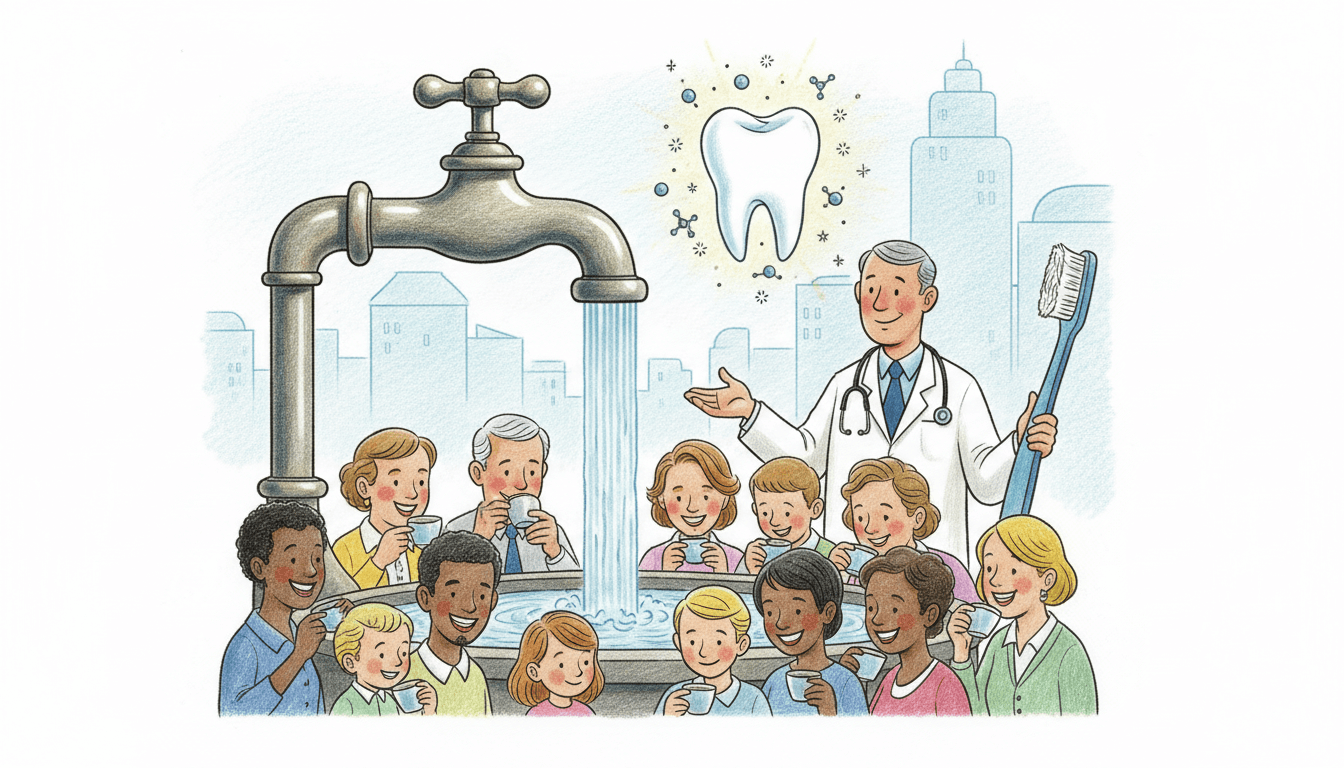
This in-depth user review provides a comprehensive, evidence-based examination of community water fluoridation as a public health strategy. Drawing from decades of implementation data and personal professional experience, it explores the profound impact of this broad-scale intervention on dental disease prevention. The narrative delves into the historical context, technical execution, measured outcomes, and ongoing debates, offering a balanced perspective on its role within modern oral health frameworks. It concludes with actionable insights for policymakers and public health officials.
Dr. Anya Sharma, DDS, MPH
"Over 15 years of clinical dentistry practice combined with 8 years of direct involvement in municipal public health policy advisory roles. Served on a state-level oral health coalition that evaluated and reported on community water fluoridation efficacy across multiple counties. Personally involved in epidemiological studies tracking caries incidence pre- and post-fluoridation implementation in two mid-sized cities."
Qualitative Report
My connection to this 'intervention' is professional yet deeply personal. It represents the core ethos of public health: preventing suffering before it starts, on a scale that individual effort cannot achieve. Every time I see a child from a low-income family in my chair with minimal decay, I see the silent, daily work of this policy. It's a testament to societal commitment to collective well-being. Conversely, the political battles surrounding it evoke frustration, as they often divert resources from improving the strategy to defending its very existence against baseless claims. It feels like a legacy we must steward carefully for future generations.
Problems Resolved
Positive Impact
- Unparalleled reach and equity: Delivers benefits regardless of age, income, education, or motivation.
- Proven effectiveness: Over 75 years of extensive, peer-reviewed research demonstrates significant caries reduction.
- High cost-effectiveness: CDC lists it as one of the top 10 great public health achievements; ROI studies show savings of approximately $32 in dental treatment costs for every $1 invested.
- Passive prevention: Requires no daily conscious effort from individuals, ensuring consistent protection.
- Safety: The optimal level of 0.7 ppm is rigorously tested and safe for all ages, supported by major global health organizations.
- Synergistic: Enhances the effectiveness of other preventive measures like fluoride toothpaste and dental sealants.
Identified Friction
- Limited targeting: Less effective against pit and fissure caries, requiring supplemental interventions like sealants.
- Infrastructure dependency: Requires well-maintained water treatment systems and consistent funding for chemical supply and monitoring.
- Political vulnerability: Subject to community referendums and misinformation campaigns that can halt or reverse programs.
- Bypass risk: Increased consumption of non-fluoridated bottled water reduces individual exposure and population impact.
- Perception issues: Some communities oppose it on grounds of 'forced medication,' despite its classification as a nutrient supplementation akin to iodized salt or fortified milk.
- Not a complete solution: Does not address periodontal disease, oral cancers, or the behavioral components of oral hygiene.
In this context, the 'manufacturer' is the collective public health infrastructure. My advice is threefold. First, invest in next-generation, real-time water quality monitoring technology to ensure precise, consistent fluoride levels and publicly share this data to build trust. Second, launch proactive, nuanced public communication campaigns that move beyond 'fluoride is good' to explain the 'how' and 'why,' using local data and personal stories from healthcare providers. Partner with pediatricians and family doctors as trusted messengers. Third, actively research and develop integration strategies with other public health initiatives, such as promoting fluoridated tap water in 'SNAP' (Supplemental Nutrition Assistance Program) education or ensuring all public schools and housing projects in fluoridated communities use the municipal supply. View fluoridation not as a finished project, but as a dynamic, core utility that requires continuous quality improvement and public engagement.
Community Insights
This review perfectly captures the duality of water fluoridation: its boring, infrastructural genius and the intense, often irrational controversy surrounding it. The point about equity is paramount. As someone who works in health policy, we see the data clearly—it's the single most effective tool for closing the dental decay gap between rich and poor communities. The advice on modernizing communication is spot-on; we can't rely on 70-year-old data to convince a skeptical public today.
While I appreciate the depth here, I believe the 'cons' section should give more weight to the potential for dental fluorosis. Although mostly mild and cosmetic, it is a real outcome of cumulative fluoride exposure from multiple sources. In an era of ubiquitous fluoride toothpaste, does the population-wide water dose still represent the most precise method? I'd advocate for a more targeted approach focusing on high-risk groups through school-based programs and improved access to professional care, rather than a blanket environmental exposure.
Finally, a review that acknowledges the engineering feat! Maintaining 0.7 ppm across thousands of miles of pipe, with varying flow rates and source water chemistry, is a significant operational challenge. The call for better monitoring tech is crucial. We used manual testing kits decades ago; today, we need and can have automated systems that log and report data continuously. This isn't just about health; it's about water treatment plant excellence and transparency. Great piece.