Electric vs Manual Toothbrushes: A Comprehensive Oral Health Comparison and Analysis
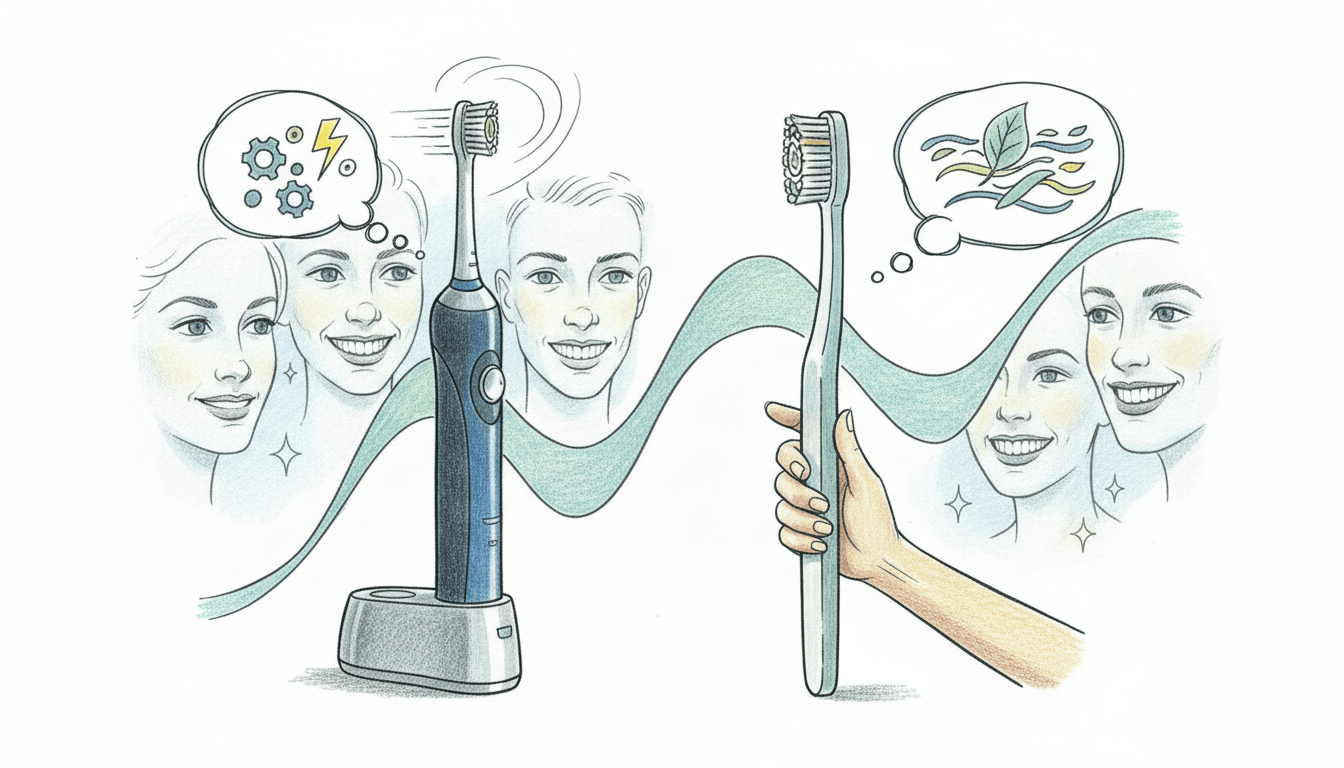
This definitive analysis compares electric and manual toothbrushes, grounded in extensive clinical research. We examine plaque and gingivitis reduction metrics, technical performance, and long-term oral health outcomes. The article provides a detailed breakdown of features, pros, cons, and real-world usage for each type, culminating in expert commentary and tailored buying advice to help you select the optimal tool for your individual dental hygiene needs.
The choice between an electric and a manual toothbrush is more than a matter of convenience or cost; it is a decision that impacts long-term oral health outcomes. This comprehensive comparison is built upon a foundational bedrock of scientific evidence, most notably the rigorous Cochrane Collaboration Systematic Review, which analyzed data from 4,624 participants across numerous clinical trials. The core finding—that electric toothbrushes, particularly oscillating-rotating models, offer a statistically significant 11-21% greater plaque reduction and a 6-11% greater reduction in gingivitis compared to manual brushes—serves as our starting point for a deep exploration. However, raw percentages only tell part of the story. This article will dissect the 'why' behind these numbers, examining the biomechanics of cleaning, the role of user technique, and the nuanced benefits of smart features like timers and pressure sensors. We will move beyond the headline statistics to consider real-world application, cost-benefit analysis over years of use, and how individual factors such as dexterity, orthodontic work, and gum sensitivity play a decisive role. Our goal is to transform data into actionable wisdom, providing you with a resource so detailed that you can confidently select the tool that aligns perfectly with your unique oral health journey, whether you prioritize maximal clinical efficacy, simplicity, sustainability, or budget-conscious care.
Detailed Analysis
Electric Toothbrushes
Strengths
- Superior Plaque and Gingivitis Reduction: The core advantage, validated by the Cochrane Review's 11-21% plaque reduction and 6-11% gingivitis reduction metrics, is undeniable. The automated brushing action ensures a consistent number of brush strokes per second, a level of mechanical efficacy difficult to replicate manually. This is especially beneficial for reducing inflammation at the gum line, a key factor in preventing periodontitis.
- Enhanced Compliance and Technique Guidance: The built-in two-minute timer is a game-changer for adherence to dental recommendations. Quadrant pacers (30-second intervals) ensure even time distribution across all areas of the mouth, preventing neglect of harder-to-reach posterior teeth. Pressure sensors are critical for preventing abrasive damage to enamel and gums, a common issue with overzealous manual brushing.
- Accessibility and Ease of Use: For individuals with limited dexterity due to arthritis, carpal tunnel syndrome, or developmental conditions, the powered handle does most of the work. The user primarily needs to guide the brush, making effective cleaning more achievable. This also benefits children learning proper brushing habits and individuals with orthodontic appliances, where cleaning around brackets and wires is notoriously challenging.
- Data-Driven Oral Care: For the engaged patient, smart features and app connectivity transform brushing from a routine task into a measurable health activity. Visual feedback on missed spots encourages more thorough cleaning, and long-term tracking can reveal patterns to discuss with a dental hygienist, facilitating proactive care.
Limitations
- Significantly Higher Initial and Ongoing Cost: The upfront investment for a quality electric brush can be 10-50 times that of a manual brush. This is compounded by the recurring expense of replacement brush heads, which are proprietary and typically need changing every 3 months, creating a long-term financial commitment akin to a subscription model.
- Maintenance and Portability Complexity: The device requires charging, which can be inconvenient during travel if a charger or compatible outlet is forgotten. The brush handle, charging base, and travel case create more bulk. Water exposure can sometimes lead to failure over many years, and the electronic components generate e-waste at end-of-life.
- Potential for Over-Reliance on Technology: There is a risk that users may assume the device does all the work, leading to passive brushing where the brush is merely held against teeth without systematic movement across all surfaces. This can compromise effectiveness, particularly in interproximal areas. The 'whitening' or 'deep clean' modes may also encourage excessive pressure or duration, potentially harming enamel if used indiscriminately.
- Sensory Overload and Adjustment Period: The vibration and noise can be unpleasant or overwhelming for some users, especially those with sensory sensitivities. The feeling is distinctly different from manual brushing and requires an adjustment period. The multitude of modes and settings can also be confusing rather than helpful for users seeking simplicity.
Adopting an electric toothbrush, particularly an oscillating-rotating model, often results in an immediate perceptual difference: teeth feel 'dentist-clean' and noticeably smoother. Users frequently report their hygienists commenting on improved plaque control during check-ups. The timer functionally eliminates the tendency to cut brushing short. However, the experience is not without friction. The 'buzzing' can cause tickling or gagging initially. Travel requires forethought—packing the charger or ensuring the battery is full. The cost of replacement heads becomes apparent on the first shopping trip, a stark contrast to buying a pack of manual brushes. For families, managing multiple chargers and identifying individual brush heads can be a minor logistical hassle. Yet, for most long-term users, the benefits crystallize into a non-negotiable part of their routine; the thought of returning to a manual brush feels like a step backward in efficacy and convenience. The real-world payoff is the potential for fewer cavities, less bleeding gums, and more confident dental visits.
Manual Toothbrushes
Strengths
- Unmatched Cost and Accessibility: The financial barrier to entry is virtually nonexistent. High-quality manual toothbrushes are available globally at minimal cost, making them the default option for public health initiatives and budget-conscious households. There are no hidden costs—no need for replacement heads specific to a model, just a new brush every 3-4 months.
- Ultimate Simplicity and Reliability: There is nothing to charge, no settings to configure, and no risk of electronic failure. It is always ready for use, making it supremely reliable for travel, emergency kits, or situations without consistent electricity. This simplicity is psychologically appealing and reduces decision fatigue in daily routines.
- Full Tactile Feedback and Control: A skilled user receives direct sensory feedback through the handle, allowing for precise adjustment of pressure and angle. This can be advantageous for targeting specific areas of discomfort or sensitivity, as the user has complete, immediate control over the brushing action without the intermediary of a motor.
- Environmental and Minimalist Appeal: For the eco-conscious consumer, bamboo or recycled plastic manual brushes present a lower-waste option, especially when paired with bristle recycling programs where available. The minimalist ethos of 'less technology, more technique' resonates with individuals seeking to declutter their lives and hygiene routines from digital dependencies.
Limitations
- Effectiveness Heavily Reliant on Perfect Technique: This is the most significant drawback. Most people do not brush for a full two minutes, do not use an effective technique, and apply excessive pressure. Studies consistently show poor public adherence to ideal manual brushing methods, which directly undermines the tool's potential efficacy. The lack of built-in guidance perpetuates these shortcomings.
- Lower Plaque Removal Efficacy on Average: The Cochrane data is clear: even with perfect technique, the manual brush's mechanical action cannot match the high-frequency oscillations or rotations of an electric brush. The 11-21% plaque reduction gap represents a clinically meaningful difference that, over decades, could influence the progression of gum disease and interproximal decay.
- Challenging for Users with Dexterity Limitations: For aging populations or those with physical impairments affecting the hands, wrists, or shoulders, the fine motor movements required for effective manual brushing can be painful or impossible. This often leads to neglected areas, accelerating oral health decline in vulnerable groups.
- Lack of Objective Feedback: There is no timer to signal when two minutes are up, no pacer for even coverage, and no alert for excessive pressure. Users operate in a feedback vacuum, often overestimating the quality and duration of their brushing. This makes it difficult to self-correct habits without professional coaching from a dental hygienist at semi-annual visits.
Using a manual toothbrush is a deeply ingrained, intuitive habit for billions. It offers a sense of direct agency—the clean feeling is a direct result of one's own effort. For the disciplined individual with excellent technique, it can provide perfectly adequate daily cleaning. The experience is quiet, controlled, and meditative for some. Travel is effortless: a brush tossed in a bag requires no forethought. However, the real-world experience for the average user is often one of unconscious shortcuts. Without a timer, brushing duration is frequently guessed and falls short. Pressure is rarely monitored, leading to gum recession over time. The back molars and inner surfaces of lower front teeth are commonly missed. The experience at a dental cleaning can be a recurring reminder of these shortcomings, with the hygienist pointing out consistent problem areas. For many, the manual brush is a tool of habit and economy, but its effectiveness is inextricably linked to the user's knowledge, diligence, and physical capability—a variable that the electric brush seeks to minimize.
Matrix View
| Feature | Electric | Manual |
|---|---|---|
| Plaque Removal Efficacy (Clinical) | Superior. 11-21% more effective per Cochrane Review. Oscillating-rotating models lead. | Effective with perfect technique, but statistically less so on average. |
| Gingivitis/Inflammation Reduction | Superior. 6-11% greater reduction in gingivitis. Consistent gentle cleaning aids gum health. | Good with proper angled technique at gumline, but prone to trauma from over-brushing. |
| Ease of Use & Accessibility | High. Motor does the work; ideal for limited dexterity, arthritis, orthodontics. | Moderate to Low. Requires full manual dexterity, coordination, and reach. |
| Technique Dependency | Low to Moderate. Guided by timer/pacer. User must still position brush systematically. | Extremely High. 100% of outcome depends on user's skill, duration, and method. |
| Cost Over 3 Years (Initial + Ongoing) | High (~$150-$300). Initial device ($80-$200) + quarterly brush heads ($15-$40/year). | Very Low (~$10-$30). Initial brush ($2-$5) + quarterly replacements (similar cost). |
| Travel & Portability | Moderate. Requires charger/case, or ensuring full charge. More bulk. | Excellent. Zero requirements, ultra-compact, always ready. |
| Environmental Impact | Higher. Electronics, battery, mixed materials create e-waste. Brush heads are plastic waste. | Lower. Single-material (or bamboo) design. Simpler disposal, but still plastic waste unless bamboo. |
| Feature Set & Guidance | Extensive. Timers, sensors, multiple modes, smart apps for personalized feedback. | Minimal. Relies solely on brush design (bristle pattern, handle grip). |
EXPERT VERDICT
The debate between electric and manual toothbrushes is not about declaring one universally 'better,' but about matching the tool to the individual's circumstances, goals, and challenges. As dental professionals, we base our recommendations on the Cochrane Collaboration's gold-standard evidence: electric toothbrushes with an oscillating-rotating action provide a clinically significant advantage in plaque and gingivitis reduction for the general population. This advantage is not marginal; an 11-21% improvement in plaque control is the difference between a stable, healthy mouth and one that is slowly accumulating the biofilm that leads to decay and periodontal disease over time. For my patients with a history of gingivitis, poor manual dexterity, orthodontic appliances, or a simple desire to optimize their home care, I strongly recommend a quality electric brush. The built-in timer and pressure sensor alone correct the two most common patient errors. However, I firmly reject the notion that manual brushes are obsolete. For the motivated, educated patient with excellent technique, healthy gums, and no physical limitations, a manual brush is a perfectly effective and economically rational choice. The critical factor is not the tool itself, but the consistency, duration, and technique of its use. An electric brush in the hands of a careless user will underperform a manual brush in the hands of a skilled one. Therefore, the ultimate verdict is conditional. If you seek to maximize clinical efficacy, minimize the impact of imperfect technique, and leverage technology for better habits, invest in an electric toothbrush. If you have mastered technique, prioritize simplicity and minimalism, and are on a strict budget, a manual brush will serve you well. Regardless of choice, the non-negotiable elements remain: two minutes, twice daily, with fluoride toothpaste, flossing interdentally, and regular professional cleanings. The brush is a vital instrument, but the symphony of oral health is conducted by informed, consistent habits.