Technological Innovations in Dental Diagnostics: A Deep Dive into AI, Imaging, and Personalized Care
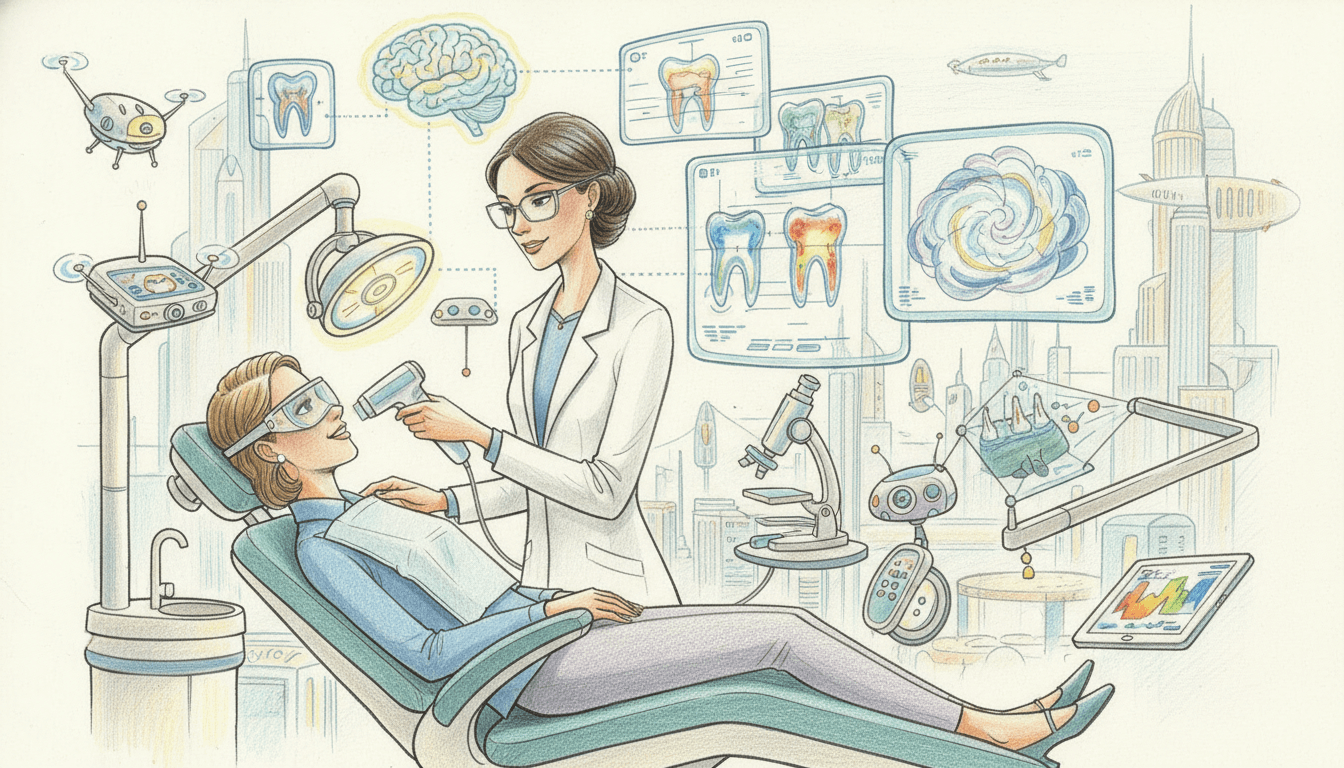
This comprehensive guide explores the revolutionary landscape of modern dental diagnostics, detailing how artificial intelligence, advanced 3D imaging, predictive analytics, and real-time monitoring systems are transforming early detection and personalized oral health management. We examine the technical underpinnings of these tools, their clinical applications, and the long-term implications for both dental professionals and patients seeking proactive, data-driven care for a healthier smile.
The field of dentistry is undergoing a profound paradigm shift, moving from reactive treatment to proactive, predictive, and highly personalized health management. At the heart of this transformation lies a suite of groundbreaking technological innovations in dental diagnostics. These are not mere incremental upgrades to traditional tools; they represent a fundamental reimagining of how oral health is assessed, monitored, and preserved. Driven by data, artificial intelligence, and unprecedented imaging clarity, these advances empower clinicians to detect pathologies like caries, periodontal disease, and oral cancers at their earliest, most treatable stages—often long before symptoms are visible to the naked eye or felt by the patient. For the consumer, this means a future where dental visits are less about drilling and filling and more about collaborative, data-informed planning to maintain optimal oral health. This deep-dive article, informed by insights from the Dental Technology Innovation Center, will exhaustively explore these cutting-edge tools. We will dissect the technical realities of AI-powered diagnostics, delve into the capabilities of advanced imaging, unpack the promise of predictive analytics, and illustrate how personalized risk assessment and continuous monitoring are creating a new standard of care. This is more than a review of gadgets; it's an exploration of a smarter, more precise, and ultimately more human-centric approach to oral wellness.
The Rise of AI-Powered Diagnostic Tools in Clinical Practice
Artificial Intelligence has moved from theoretical promise to practical, clinical reality in dental diagnostics, fundamentally altering the diagnostic workflow. At its core, AI in this context refers to sophisticated machine learning algorithms, particularly deep learning convolutional neural networks, that are trained on vast datasets of annotated dental imagery—including X-rays, intraoral scans, and clinical photographs. These algorithms learn to identify patterns and anomalies associated with a wide range of conditions with a level of consistency and speed unattainable by the human eye alone. For instance, an AI system can analyze a bitewing radiograph in milliseconds, highlighting areas of potential interproximal caries (cavities between teeth) that might be obscured by overlapping tooth structures or early bone loss indicative of periodontitis. The technology's capability extends beyond detection to include classification and quantification, such as staging the severity of gum disease or measuring the exact dimensions of a periapical lesion. This serves as a powerful second opinion for the dentist, reducing diagnostic subjectivity and the risk of oversight. Furthermore, AI tools are being integrated into practice management software, automatically populating patient charts with findings and suggested treatment codes, streamlining administrative burdens. However, it's crucial to understand that these are assistive, not replacement, technologies. The final diagnosis and treatment plan remain the responsibility of the skilled clinician, who uses the AI's output as a highly informed data point within the broader context of the patient's clinical history and examination. The long-term outlook points towards even more integrated systems where AI will not only diagnose but also predict treatment outcomes and simulate post-treatment aesthetics, truly becoming a collaborative partner in clinical decision-making.
Advanced Imaging Technologies: Beyond the 2D X-Ray
The evolution of dental imaging from analog film to digital 2D radiography was a significant leap, but the current revolution is defined by three-dimensional, high-resolution, and often real-time visualization. Cone Beam Computed Tomography (CBCT) is a cornerstone of this advancement, providing detailed 3D volumetric data of the maxillofacial region. Unlike medical CT, CBCT uses a cone-shaped X-ray beam, resulting in lower radiation doses while offering exceptional clarity for complex diagnostic tasks such as planning dental implant placement, evaluating impacted teeth, diagnosing temporomandibular joint disorders, and assessing endodontic complications. The data from a CBCT scan can be manipulated in software to view structures from any angle, perform precise measurements, and even simulate surgical procedures. Parallel to this, intraoral scanning has largely replaced messy physical impressions. Modern intraoral scanners use confocal microscopy or structured light technology to capture millions of data points, creating a highly accurate digital 3D model of the patient's dentition in minutes. This model is the foundation for digital workflows in restorative dentistry, orthodontics, and prosthodontics. Furthermore, advancements in optical coherence tomography (OCT) and near-infrared transillumination (NIRI) are pushing the boundaries of non-ionizing imaging. NIRI, for example, uses harmless near-infrared light to penetrate enamel, making early caries lesions appear as dark shadows with high contrast, often detecting them earlier than traditional X-rays. These imaging modalities are increasingly being fused—a process called data co-registration—where a CBCT scan of the bone is merged with an intraoral scan of the teeth and gums, creating a comprehensive digital twin of the patient's oral anatomy. This holistic view is invaluable for comprehensive treatment planning, allowing for unprecedented precision and predictability in outcomes.
Predictive Analytics and Personalized Risk Assessment
The true power of modern dental diagnostics lies not just in identifying existing disease but in forecasting future risk, enabling truly preventive care. Predictive oral health analytics leverages large-scale population data, genetic information, microbiomic analysis, and individual patient data (from AI and imaging tools) to build probabilistic models. These models can assess a patient's susceptibility to specific conditions, such as caries, periodontal disease, or even oral cancer. For example, a risk assessment algorithm might integrate data points like the patient's history of decay, the composition of their oral microbiome (determined via saliva tests), dietary habits, genetic markers for inflammatory response, and real-time data from a smart toothbrush on brushing effectiveness. By synthesizing these disparate data streams, the system can generate a personalized risk profile, assigning a percentage likelihood of developing new caries or periodontal attachment loss over the next 12, 24, or 60 months. This moves care from a one-size-fits-all recall schedule (e.g., cleanings every 6 months) to a risk-adjusted, personalized maintenance plan. A high-risk patient might be scheduled for more frequent monitoring, prescribed specific antimicrobial rinses, or given targeted dietary counseling, while a low-risk patient maintains a standard schedule. This model of precision prevention is cost-effective and improves long-term outcomes. Industry experts, like Dr. Elena Rodriguez, a researcher in computational dentistry, note, 'We are shifting from treating disease episodes to managing a patient's lifelong oral health trajectory. Predictive analytics gives us the map and the compass for that journey.' The long-term outlook involves integrating these dental risk scores with broader systemic health data, recognizing the well-established oral-systemic link, to provide a more holistic view of an individual's health risks.
The Mechanics and Promise of Real-Time Oral Health Monitoring
The diagnostic process is expanding beyond the dental office walls through the emergence of real-time oral health monitoring systems. These technologies create a continuous feedback loop between patient and provider, transforming daily oral hygiene from a routine task into a data-generating health behavior. The most prominent examples are 'smart' electric toothbrushes equipped with inertial measurement units (IMUs), pressure sensors, and cameras. These devices can track brushing duration, coverage, frequency, and technique, providing users with immediate feedback via a smartphone app. More advanced systems can even use AI to analyze images of the gums and teeth taken by the brush's camera over time, looking for early signs of gingivitis, plaque accumulation, or staining. This data is often synced to a cloud-based dashboard accessible to the dental professional, who can review trends and intervene with personalized coaching between appointments. For orthodontic patients, remote monitoring platforms use smartphone selfies or scans with provided cheek retractors to track tooth movement, aligner fit, and oral hygiene, reducing the number of in-office visits required. The technical data underpinning these systems involves sophisticated sensor fusion algorithms and secure data transmission protocols. The promise is immense: by catching detrimental habits (like over-brushing or missed quadrants) early and reinforcing positive ones, these tools can significantly improve home care efficacy. They also empower patients, giving them tangible metrics for their oral health. The long-term vision is a fully integrated ecosystem where data from smart brushes, dietary tracking apps, and even salivary biosensors flow into a central health platform, providing a comprehensive, real-time picture of oral and systemic wellness, enabling micro-interventions before issues escalate into clinical problems.
Technical Deep Dive: Machine Learning Algorithms and 3D Scanning
To fully appreciate these innovations, a deeper understanding of their technical foundations is essential. The machine learning-based detection algorithms mentioned in the technical data are typically built on deep learning architectures. For image analysis, Convolutional Neural Networks (CNNs) are dominant. A CNN is trained on hundreds of thousands of labeled dental images. During training, it learns hierarchical features—from simple edges in early layers to complex shapes like cavity outlines or periodontal bone patterns in deeper layers. Once trained, the model can apply these learned features to new, unseen images and output a probability map highlighting regions of interest. The accuracy of such a model is contingent on the size, diversity, and quality of its training dataset. Meanwhile, the high-resolution 3D scanning techniques used in intraoral scanners primarily rely on two principles: confocal microscopy and structured light. Confocal microscopy, used by systems like the iTero Element, projects a pattern of light onto the tooth surface. Sensors only capture light from the exact focal plane, allowing for precise depth mapping as the pattern is scanned across the surface. Structured light scanners, like the 3Shape Trios, project a series of coded light patterns onto the teeth. A camera observes the deformation of these patterns, and sophisticated algorithms calculate the 3D surface geometry. Both methods capture data at micron-level resolution, creating a point cloud that is then converted into a polygon mesh, resulting in the detailed digital model used for diagnostics and fabrication. The convergence of these two technical streams—AI analysis of 2D/3D data and high-fidelity 3D data capture—is what creates the powerful diagnostic ecosystems we see today.
Integration, Challenges, and the Long-Term Outlook for Dental Diagnostics
The ultimate value of these disparate technologies is realized through their integration into a seamless digital workflow. The ideal future dental practice operates on a unified software platform where patient data from AI diagnostics, 3D imaging, predictive risk models, and at-home monitoring devices converge into a single, interactive patient record. This digital hub would allow the dentist to view a timeline of the patient's oral health, simulate treatment outcomes, and communicate plans with unparalleled clarity using 3D visualizations. However, significant challenges remain on this path. Interoperability between devices and software from different manufacturers is a major hurdle, often leading to data silos. The high initial cost of advanced equipment like CBCT scanners and AI software licenses can be prohibitive for smaller practices, potentially widening the care gap. Data privacy and security are paramount concerns, especially with cloud-based analytics and remote monitoring transmitting sensitive health information. Furthermore, there is a need for updated education and training for dental professionals to effectively interpret and utilize these new data streams. Despite these challenges, the long-term outlook is overwhelmingly positive. We are moving towards a model of 'continuous dentistry,' where care is a constant, data-informed partnership rather than a semi-annual event. Experts predict the rise of teledentistry hubs where AI performs initial screenings, triaging patients for in-person care. Biomarker discovery from saliva and gingival crevicular fluid will lead to chairside diagnostic tests for systemic conditions. In essence, the dental office is evolving into a primary healthcare diagnostic center, leveraging the oral cavity as a window to overall health, all powered by the relentless advance of diagnostic technology.
Key Takeaways
FAQs
Are AI diagnostics in dentistry reliable, or can they make mistakes?
AI diagnostics are highly reliable for specific, well-defined tasks like detecting radioucent lesions on X-rays, often matching or exceeding expert human performance in controlled studies. However, they are not infallible. Their accuracy depends entirely on the quality and diversity of the data they were trained on. They can produce false positives or, more concerning, false negatives. Therefore, they are designed and regulated as assistive devices. The final diagnosis must always be made by a licensed dentist who considers the AI output alongside a full clinical examination, patient history, and their own professional judgment.
Is the radiation from a 3D CBCT scan dangerous?
CBCT scans are generally considered safe when used appropriately. The effective radiation dose from a typical dental CBCT is significantly lower than that of a medical CT scan of the same area and is often comparable to, or only a few times higher than, a full series of traditional 2D dental X-rays. Dentists follow the ALARA principle (As Low As Reasonably Achievable), only prescribing CBCT when the diagnostic benefits outweigh the minimal risks, such as for complex implant planning or diagnosing obscure pain. The technology itself incorporates features to minimize scatter and focus the beam precisely on the area of interest.
How does personalized risk assessment actually change my dental care?
Instead of you and everyone else being advised to visit the dentist every six months, a personalized risk assessment tailors your care plan. If you are assessed as high-risk for cavities, your dentist might recommend more frequent cleanings (e.g., every 3-4 months), prescribe high-fluoride toothpaste, use in-office fluoride varnishes, and provide detailed dietary counseling. A low-risk patient might maintain a standard six-month or even annual recall. This risk-based approach is more scientifically sound, cost-effective in the long run, and focuses resources where they are needed most to prevent disease before it starts.
Do I need to buy an expensive smart toothbrush to benefit from these advances?
Not necessarily. While smart toothbrushes provide valuable data and feedback, the core technological benefits are delivered at the dental office through AI-assisted diagnostics, advanced imaging, and risk modeling. A smart brush is a powerful tool for improving your home care, which is a critical component of oral health, but it is a complement to, not a replacement for, professional diagnostic technology. You can absolutely benefit from the diagnostic revolution without one. However, if you struggle with consistency or technique, a smart brush can be an excellent investment in conjunction with professional guidance.
Will these new technologies make dental care more expensive?
There is an upfront cost for practices to adopt this technology, which may be reflected in fees for advanced diagnostic services like 3D scans or AI analysis. However, the long-term economic argument is compelling. By enabling earlier detection and more effective prevention, these technologies aim to reduce the need for complex, invasive, and expensive procedures like root canals, crowns, and implants down the line. For patients, investing in precision diagnostics and prevention can lead to significant savings over a lifetime by avoiding major dental work. Many insurers are beginning to recognize this value and cover aspects of these services.
What is the 'digital twin' concept in dentistry?
A digital twin is a comprehensive, dynamic digital replica of your unique oral anatomy and physiology. It is created by combining data from various sources: a 3D scan of your teeth and gums, CBCT data of your jawbone, photographs, X-rays, and even your risk profile. This virtual model allows your dentist to simulate treatments (like showing you a preview of new veneers), plan surgeries with extreme precision, and track minute changes in your oral health over time by comparing new scans to the original 'twin.' It's a powerful tool for personalized, predictable care.
How is my data privacy protected with these connected devices and cloud AI?
Reputable dental technology companies and clinics are bound by strict health data privacy regulations like HIPAA (in the US) and GDPR (in Europe). This means patient data must be encrypted during transmission and storage, access must be controlled and logged, and patients must typically give informed consent for how their data is used. When considering a smart device or service, review the company's privacy policy. Ensure they are transparent about data ownership, whether data is anonymized for AI training, and what security certifications they hold. Your dentist should be able to explain their clinic's data protection protocols.
Can these technologies help detect oral cancer earlier?
Yes, absolutely. AI is being trained to analyze clinical photographs and tissue fluorescence images to identify suspicious lesions that may be precursors to oral cancer. Advanced imaging can help define the extent of a known lesion. Furthermore, research into salivary biomarkers—detectable through point-of-care tests—holds promise for identifying individuals at high risk or in the very early stages of oncogenic changes. While a biopsy remains the gold standard for diagnosis, these technologies serve as powerful screening tools to identify which patients need a biopsy sooner, potentially saving lives through earlier intervention.
Guide Conclusion
The landscape of dental diagnostics is being reshaped by a powerful confluence of artificial intelligence, advanced imaging, predictive data analytics, and connected health monitoring. This is not merely a trend but a fundamental evolution towards a more precise, preventive, and patient-empowered model of oral healthcare. These technologies provide the tools to detect problems at their genesis, understand individual risk with unprecedented clarity, and maintain wellness through continuous engagement. While challenges of integration, cost, and access persist, the trajectory is unequivocal. The future of dentistry is digital, data-driven, and deeply personalized. For the patient, this means a future with fewer surprises, less invasive treatment, and a stronger, healthier smile maintained through a proactive partnership with their dental care team. Embracing these innovations, both in the dental chair and at home, paves the way for a lifetime of optimal oral health.